Mirrored Fireplace Media Console: Sliding Door Guide
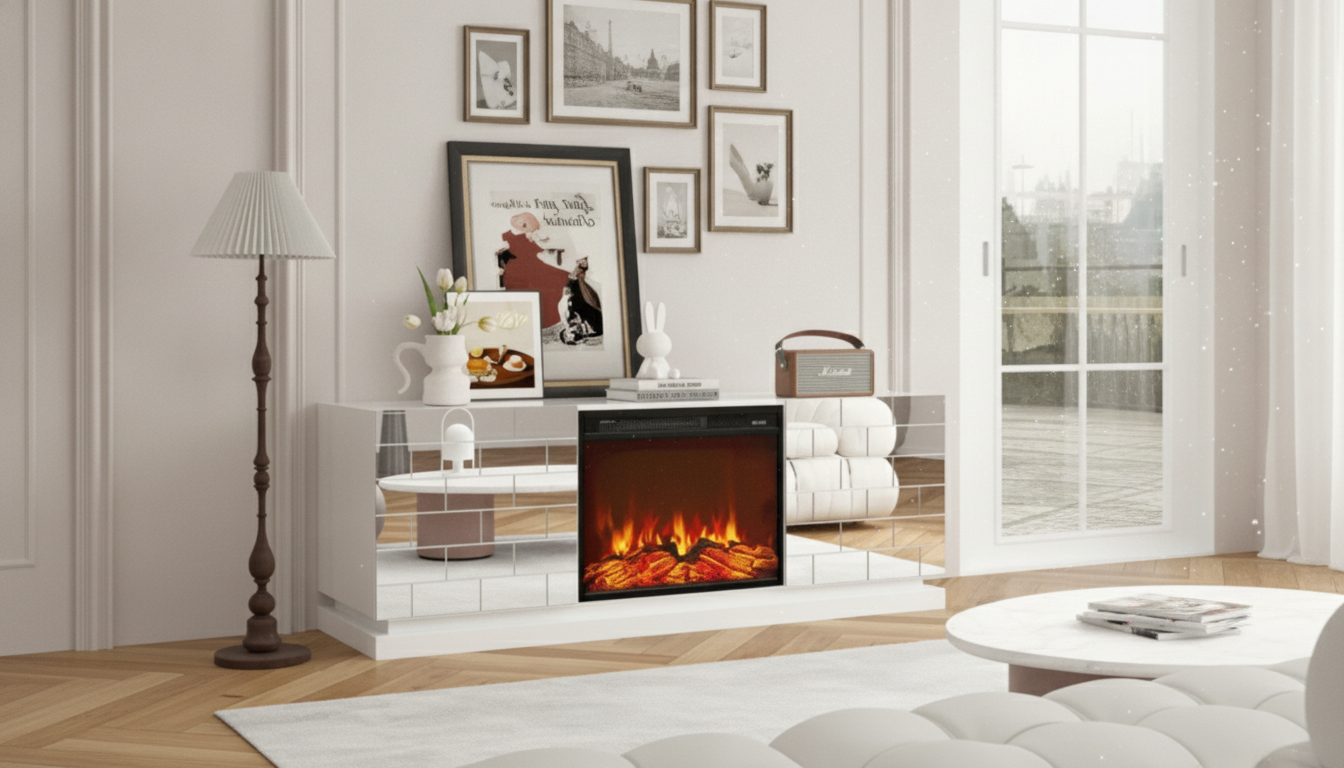
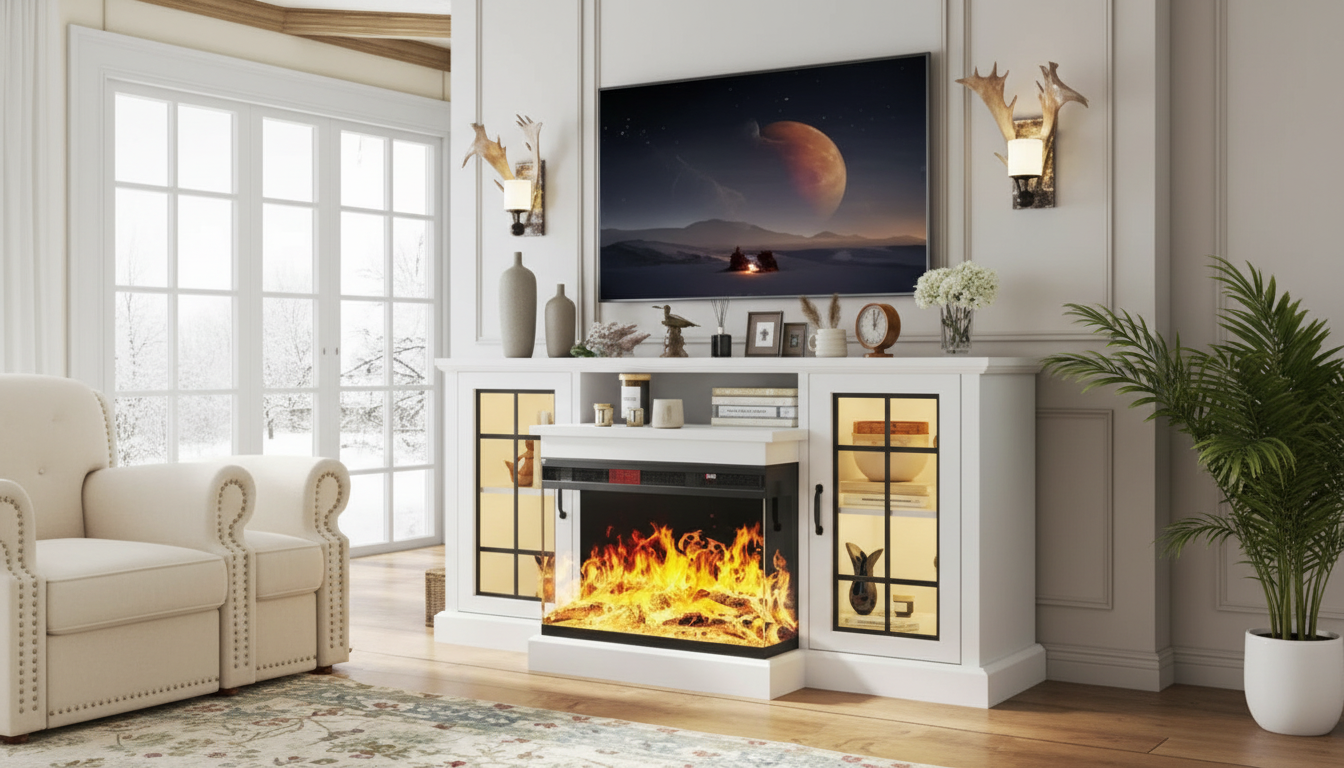
Mirrored Media Console with Electric Fireplace and Sliding Doors
A mirrored media console with an electric fireplace and sliding doors brings together everyday TV storage, a cozy flame effect, and a light-reflecting finish that can make a room feel more open. It’s a practical upgrade for living rooms that need better organization without giving up style—especially when the goal is a clean front view that hides cables, boxes, and accessories. Below are the key features to compare before buying, plus sizing, placement, and care tips that help the console look polished and perform safely.
What makes this console different from a standard TV stand
- Two-in-one function: media storage plus an integrated electric fireplace for flame ambiance with or without heat.
- Mirrored surfaces: reflect light, helping smaller rooms appear brighter and visually larger.
- Sliding doors: conceal clutter while keeping frequently used items easy to access—without door-swing clearance issues.
- Statement look: a natural fit for glam, contemporary, and transitional spaces where the console acts like décor, not just storage.
If you’re ready to shop, the Mirrored Media Console with Electric Fireplace and Sliding Doors is an all-in-one option that combines reflective door fronts with a built-in firebox for warmth and glow.
Sizing and room placement
Most frustrations with media consoles come down to fit: the TV overhangs, the components don’t breathe, or the doors can’t slide freely once décor is added. A few careful measurements (and a quick plan for power) prevent those issues.
- Measure wall space and TV footprint: confirm the console width supports the TV base/leg spread, or plan a wall-mounted TV above the console for a lighter look.
- Plan viewing height: keep the screen center close to seated eye level; if the TV is too low/high, adjust the wall mount rather than stacking items on the console top.
- Check depth for components: allow room for receivers, game consoles, and cable bends behind devices so nothing gets pinched.
- Allow ventilation space: leave airflow around electronics and avoid blocking any fireplace intake/exhaust areas.
- Mind walkway clearance: mirrored fronts show fingerprints more easily, so avoid placing the console where people constantly brush past it.
Quick measuring checklist before ordering
| Item to measure | Why it matters | Target/notes |
|---|---|---|
| Wall width | Prevents crowding and awkward furniture gaps | Leave breathing room on both sides if possible |
| TV base width/leg spread | Ensures stable placement if not wall-mounted | Console top should be wider than the TV base |
| Available depth | Avoids components protruding and cable kinks | Account for plugs, HDMI bends, and ventilation |
| Door travel space | Sliding panels need clear lateral travel | Confirm door track area won’t be blocked by décor |
| Outlet location | Reduces visible cords and power-strip clutter | Plan a concealed power strip and cable route |
Electric fireplace features to prioritize
An electric fireplace inside a console is designed for comfort and ambiance, not as a primary heat source for an entire home. Think of it as a targeted “zone heater” that can take the chill off a living room during evenings or shoulder seasons.
- Heat output expectations: performance depends on room size, insulation, ceiling height, and drafts—use it to supplement central heat.
- Flame-only mode: ideal for enjoying the glow in warmer months without raising the room temperature.
- Thermostat and timer controls: help stabilize comfort and reduce unnecessary run time.
- Fan noise considerations: if you’re sensitive to sound, keep primary seating a bit farther away and avoid corner placements that can amplify fan noise.
- Safety basics: prioritize overheat protection and keep clearance around the heater outlet; follow general heater precautions from the National Fire Protection Association and the U.S. Consumer Product Safety Commission.
Sliding doors, storage layout, and cable management
Sliding doors are a big advantage in tighter rooms because they avoid the “door swing zone” that can interfere with walkways, ottomans, and coffee tables. They also help keep a calm, symmetrical front view—even when the inside is working hard.
- Better clearance in compact spaces: no hinges to bump into nearby furniture.
- Plan what stays visible: place frequently controlled devices (cable boxes, streaming devices, game consoles) where signals can reach, or plan for an IR repeater if doors block infrared.
- Use shelves strategically: separate heat-producing components (routers, consoles) and leave space around them for airflow.
- Route cables with intention: keep power cords grouped separately from HDMI/signal cables to reduce clutter and simplify troubleshooting.
- Label and secure cords: Velcro ties make future swaps easier; avoid tight bends at HDMI connectors to prevent intermittent signal issues.
Mirrored finish care and everyday durability
Mirrored panels are surprisingly easy to maintain with the right routine, but they do show fingerprints and dust more readily than matte finishes. A few habits keep the surface crisp and reduce the risk of micro-scratches.
Setup tips for a polished look
When this style is the right fit
For a coordinated home refresh beyond the living room, consider pairing reflective finishes with other clean-lined upgrades like the 36-Inch Modern Grey Bathroom Vanity with Sink for a similarly modern, streamlined look in a bath or powder room.
FAQ
Can the fireplace be used without heat?
Many units offer a flame-only mode that lets you enjoy the visual glow without warming the room. Check the control panel or remote options to confirm the flame and heat settings can operate independently.
How much space can an electric fireplace inside a console heat?
It’s typically best for zone heating a single room, with results varying by insulation, ceiling height, and drafts. Use it as supplemental heat and follow the manufacturer’s room-size and clearance guidance for safe operation.
Do sliding doors block remote signals to devices inside?
Solid or mirrored sliding panels can reduce infrared remote reliability for devices placed behind them. If that happens, keep frequently used devices in an open bay, enable HDMI-CEC where available, or use an IR repeater.








Leave a comment