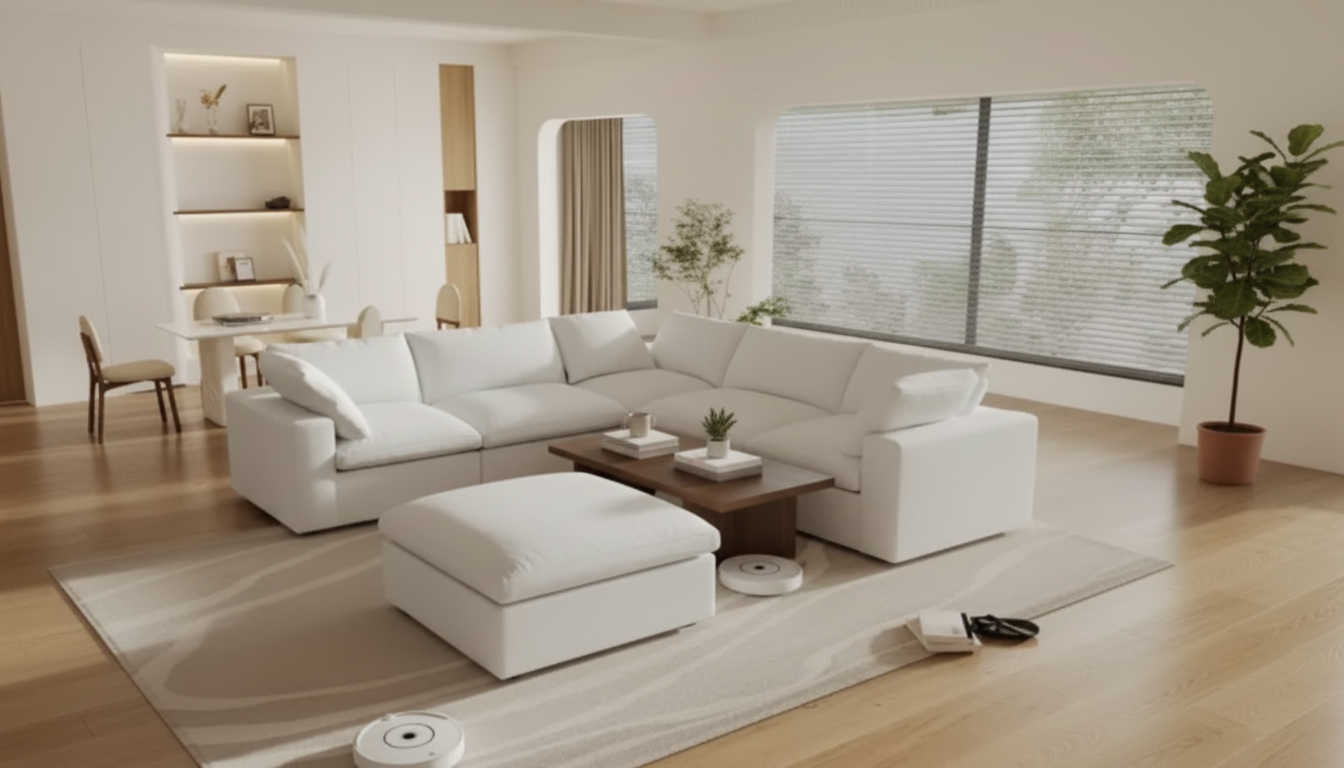
Cloud sectionals can last, but their real lifespan depends less on the “cloud” look and more on what’s underneath: the frame, suspension system, cushion fill, and how the covers are cared for. A well-built cloud-style sectional used in a typical household often stays comfortable and presentable for years, while a cheaper version may start to look tired much sooner—usually through sagging seats, flattened back pillows, and fabric pilling.
A durable sectional starts with a sturdy frame (hardwood or high-quality engineered wood) and solid joinery. Weak frames can flex, creak, or loosen over time, which makes even good cushions feel worse.
Suspension is the “support engine” of the sofa. Eight-way hand-tied springs are premium, while sinuous springs can also last well when they’re thick gauge and properly spaced. Webbing-only systems vary widely; better webbing can be fine, but thin or poorly tensioned webbing is more likely to sag.
Many cloud sectionals use a soft, sink-in blend—often down/feather, down alternative, or fiber wraps around foam cores. The softer the feel, the more routine “fluffing” and rotating you’ll need to keep seats and backs looking full. If the core foam is low-density, cushions can bottom out earlier.
Removable covers are convenient, but longevity hinges on fabric quality and care. Frequent washing, hot water, and high heat drying can shorten fabric life and change the fit, while gentle cycles and air drying help keep covers looking crisp.
For a deeper breakdown of construction details and what to look for before buying, visit the main guide here: https://tonic.sale/do-cloud-sectionals-last/.
Rotate and flip cushions (when possible), fluff back pillows weekly, and avoid always sitting in the same spot. If the sectional allows it, adding a firmer insert or replacing worn cushion cores can restore support without replacing the whole sofa.







Leave a comment